Amazing Facts about your common visitors
I've chosen 10 facts for each species of facts you may find interesting and unusual!
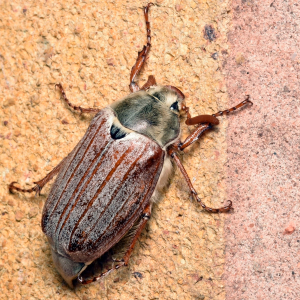
Cockchafer
The Cockchafer (Melolontha melolontha), commonly known as the May Bug or Doodlebug, is one of Europe’s most distinctive and historically famous beetle species. Easily recognized by their large size, fan-like antennae, and loud, buzzing flight, these harmless insects emerge in spectacular numbers each spring after spending up to five years developing underground.
- Many colourful nicknames: They are widely known as May Bugs, Maybeetles, Doodlebugs, or Billy Witches.
- Impression of a helicopter: They are clumsy fliers that make a loud, deep buzzing sound that often sounds like a small helicopter.
- Long life underground: They spend three to five years underground as larvae, but live for only six weeks as adults.
- Antennae sex identification: You can tell their sex by counting the fan-like "leaves" on their antennae; males have seven leaves, while females have six.
- World War II namesake: Their loud, buzzing flight pattern earned them the nickname "Doodlebug", which locals later used as the nickname for the German V-1 flying bombs.
- Exiled by a medieval court: In 1320, a court in Avignon, France, put the destructive beetles on trial, sentencing them to exile in a designated area.
- Inspiration for Nikola Tesla: As a child, the famous engineer Nikola Tesla reportedly built a toy "engine" by harnessing four living cockchafer beetles together.
- Intimidating but harmless: Despite growing up to 35mm long and possessing a pointed tail-like abdomen called a pygidium, they do not bite or sting.
- The name means "gnawer": The word "chafer" comes from an Old English word meaning "gnawer," highlighting their historic reputation for destroying crops.
- A vital source of food: Their large, fatty underground grubs—often called "rookworms"—are an incredibly important food source for birds like rooks, owls, and bats.
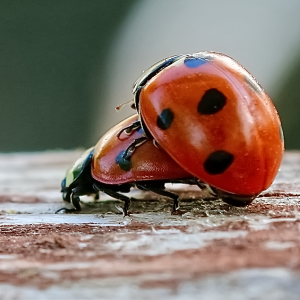
Ladybirds
Ladybirds (or ladybugs) are not actually bugs but beetles that protect crops by eating thousands of aphids, often bleeding a smelly, toxic fluid from their leg joints to deter predators. These beneficial, 6-legged insects can be red, yellow, or black, live up to two years, hibernate in large groups, and even fly at speeds reaching 37 mph.
- They are Tiny Predators: A single ladybird can consume up to 5,000 aphids in its lifetime, making them a gardener’s best friend.
- They "Bleed" From Their Knees: When threatened, ladybirds produce an oily, foul-smelling yellow fluid from their leg joints to deter predators.
- Their Colours are a Warning: The bright red, yellow, or orange colors warn predators that they taste bad and are toxic.
- They Can Play Dead: Another defense mechanism is to roll over and pretend to be dead, or "thanatosis".
- They Are Not Actually "Bugs": Ladybirds are beetles (Order Coleoptera), not bugs (Order Hemiptera), often called lady beetles.
- They Hibernate in Groups: During winter, they hibernate, often gathering in large, cozy colonies under bark or in sheltered areas.
- Their Larvae Look Like Tiny Alligators: Before turning into adults, ladybird larvae are long, spiky, and dark-coloured, often described as tiny, hungry alligators.
- They Have Thousands of Species: While the red-and-black Seven-spot is famous, there are over 6,000 species of ladybirds globally.
- They Can Eat Their Own Eggs: If food is scarce, female ladybirds will eat their own infertile (or even fertile) eggs to survive.
- They Have Been to Space: NASA sent ladybirds to space to study how they, along with aphids, behave in zero gravity.
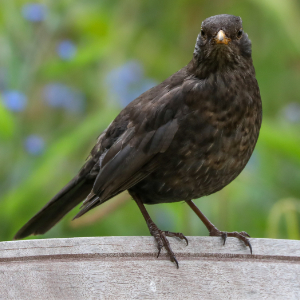
Blackbirds
Eurasian blackbirds (Turdus merula) are highly adaptable, iconic songbirds known for their melodic tunes, vibrant yellow beaks, and, surprisingly, brown-feathered females. They are masters of urban survival, using "side-tilting" to hunt worms, often mating for life, and thriving in gardens across Europe and beyond.
- Females Aren't Black: Only adult males are all-black with bright yellow-orange bills. Females and juveniles are brownish with spotted breasts, providing camouflage to evade predators.
- They "Listen" for Worms: Blackbirds are often seen cocking their heads to the side on lawns. They are likely listening for, or spotting, the minute movements of worms underground
- Extremely Long-Lived Songsters: While their average lifespan is 3–4 years, the oldest recorded wild blackbird was over 20 years old.
- Masters of Sound: Known for their beautiful, flute-like song, they often sing from high perches at dawn and dusk.
- They Love Sunbathing: Blackbirds are often seen sunbathing, lying in the sun with wings spread to help kill parasites in their feathers.
- "Cement" Experts: Female blackbirds build intricate, cup-shaped nests using grass and twigs, binding them with mud. They often reuse the same territory every year.
- Globally Introduced: Originally from Europe, Asia, and North Africa, they were introduced to Australia and New Zealand in the 1800s, where they are now common.
- Huge Winter Population Growth: While 5 million pairs breed in the UK, the population swells to 15 million in winter, with visitors arriving from Scandinavia and Europe.
- Socially Monogamous: Roughly 80% of pairs stay together for life, maintaining their bond as long as both partners survive.
- They Can Be Partially White: Leucistic (partially white) blackbirds are almost twice as common in urban areas as in the countryside, likely due to higher mutation rates or different pressures in city environments.
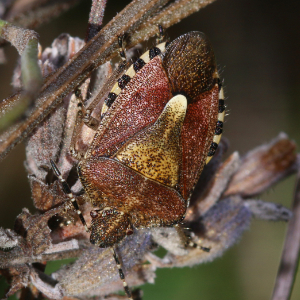
Shield Bugs
Shield bugs (or stink bugs) are fascinating insects known for their broad, shield-shaped bodies, pungent chemical defenses, and surprising maternal care. These sap-sucking insects use specialized scent glands to deter predators, can change color for camouflage, and are dedicated parents, with some species guarding their young, offering a glimpse into complex insect behaviors.
- They are Named for Their Armor: Shield bugs get their name from their broad, shield-shaped body, specifically a large, triangular plate on their back known as the scutellum.
- They are Chemical Warriors: When threatened, shield bugs produce a highly pungent fluid from glands in their thorax, often described as smelling like rancid marzipan or diesel.
- Surprising Maternal Care: Unlike many insects, the Parent shield bug (Elasmucha grisea) guards her eggs and nymphs, staying with them for weeks until they are roughly half-grown.
- They Have "Stinky" Colors: Many shield bugs are brightly colored, using their appearance to warn predators of their bitter taste, while others use camouflage to blend into foliage.
- They Change Color with the Seasons: Some species, like the Green Shield Bug, turn darker or brownish-red during winter to camouflage against bare bark, returning to bright green in spring.
- They Use Bacterial "Sunscreen": Female shield bugs cover their eggs with symbiotic bacteria, which the young nymphs eat upon hatching to help them digest plant sap.
- Some are Predators: While most feed on plant sap, some species, like the Spiked Shield Bug, are predators that feed on caterpillars and other insects.
- They Communicate via Vibration: Shield bugs can communicate by creating vibrations on plants to send signals, such as indicating they are ready to mate.
- They are True Bugs: Shield bugs belong to the order Hemiptera, or "true bugs," and are characterized by their specialized piercing and sucking mouthparts.
- They Can Be Identified by Their Odor: The scent released by shield bugs is so distinct it can be used to identify them in nature.
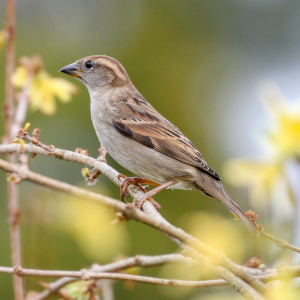
Sparrows
Sparrows are highly adaptable, sociable birds that have coexisted with humans for over 10,000 years, found on every continent except Antarctica. They are remarkably intelligent, utilizing specialized foraging techniques and dust baths to maintain cleanliness, while exhibiting strong, long-term pair bonds and complex social hierarchies based on their chest plumage.
- Global Colonizers: Sparrows are found on nearly every continent (excluding Antarctica) and are one of the most widespread wild birds globally.
- Ancient Human Companions: They have coexisted with humans for roughly 10,000 to 11,000 years, evolving a special gene (AMY2A) to digest starch found in agricultural crops.
- Surprising Longevity: While small, the oldest recorded wild house sparrow lived for nearly two decades, and they often survive for over a decade.
- Complex Communication: Sparrows use more than 20 distinct chirping sounds to communicate with one another.
- Cleanliness via Dust Baths: Sparrows frequently engage in "dust bathing," using dirt to maintain feather health and cleanliness.
- "Domino Sparrow" Incident: In 2005, a sparrow entered a Dutch exhibition center and knocked over 32,000+ dominoes, earning it the nickname "dominomus".
- Lifelong Partners... Mostly: House sparrows form lifelong pair bonds, but studies show 15% of offspring result from mating outside their pair.
- Adaptable Nesters: They are highly adaptable, building nests in roofs, signs, pipes, and even at the bottom of mine shafts.
- Social and Protective: They are very social, living in flocks, and are known to be protective of their families.
- The "Bib" Hierarchy: Male sparrows show aggression and social dominance through their black throat patch, or "bib"—the larger the bib, the more dominant the bird.
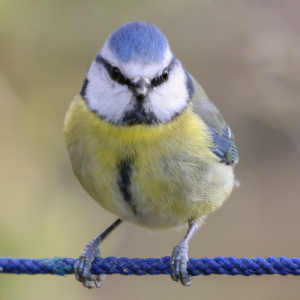
Blue Tits
Blue tits are tiny, acrobatic, and highly intelligent birds, widely recognized by their vibrant blue, yellow, and green plumage. Known for thriving in urban gardens as well as woodlands, these common visitors are often seen hanging upside down to forage and are famous for their ability to learn new tricks.
- Remarkable Egg Production: Female blue tits can lay astonishingly large clutches, sometimes up to 16-17 eggs in one go.
- UV-Reflective Feathers: Blue tits can see ultra-violet light, and their blue crown feathers glow brightly under UV, which is likely used to signal fitness to potential mates.
- Milk Bottle Thieves: They famously learned in the 1920s to open foil-topped milk bottles to drink the cream, a behavior they taught to other blue tits.
- Masters of Acrobatics: They are highly agile, often hanging upside down to feed on insects, spiders, and nuts.
- Small Size, High Energy: Weighing just around 9-11g (roughly the weight of a £1 coin) and with a wingspan of only 17-20cm, they are one of the smallest and most energetic garden birds.
- They Love Oak Trees: They, like many other forest birds, rely on oak trees, as they find a large amount of their food in it.
- Unusual Nesting Locations: While they prefer holes in trees, they are known to nest in unusual places, such as street lamps, letterboxes, drainpipes, and nest boxes.
- Winter Socializing: During winter, they form mixed-species flocks with other small birds, such as great tits, to forage together.
- Huge Populations: There are around 3.5 million breeding pairs in the UK alone, and the population has seen a long-term increase of 23% since 1967.
- Territorial Behavior: They are very protective of their nest site during the breeding season, but once the young have left, they become social and move in groups.
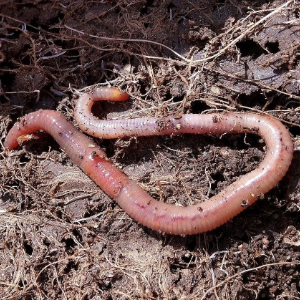
Worms
Worms are fascinating, ancient creatures (existing for over 500 million years) that act as vital ecosystem engineers, with some species growing up to 3 meters long. They are hermaphrodites with five hearts, no eyes, and the ability to consume their own body weight in soil daily, creating nutrient-rich castings.
- Multiple Hearts: Earthworms have five pairs of hearts (aortic arches) to pump blood.
- No Eyes or Ears: Though they lack eyes and ears, worms have light-sensitive receptors and can detect vibrations in the soil.
- Hermaphrodites: Every worm has both male and female reproductive organs, but they usually need a partner to mate.
- Breathe Through Skin: Worms breathe through their skin; they must stay moist or they will suffocate.
- Immense Strength: They are incredibly strong relative to their size, able to break through compacted soil.
- Regeneration Myth: If cut, only the head end can survive and regenerate (if it has the saddle/clitellum), while the tail end dies.
- Massive Eaters: A worm can eat up to half its body weight in organic matter and soil every day.
- Huge Lifespan: An average worm can live for 4–5 years.
- Ancient Creatures: Earthworms have existed for over 500 million years.
- Over 2,700 Species: There is a massive variety of earthworms globally, with over 2,700 different species identified.
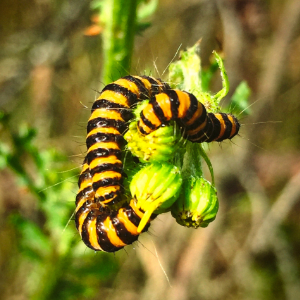
Caterpillars
Caterpillars are fascinating larval creatures that grow up to 1,000 times their birth weight, possess 4,000 muscles, and undergo metamorphosis by effectively turning into "soup" inside their chrysalis. They have 12 eyes, produce silk, and use toxins from plants to defend themselves, making them highly specialized eating machines that live for roughly 3–4 weeks.
- Massive Muscle Count: Despite being soft-bodied, caterpillars have roughly 4,000 muscles, with 248 in their heads alone—far more than the 600 or so in humans.
- They Turn Into Liquid: During metamorphosis, the caterpillar effectively digests itself, turning into a "caterpillar soup" before restructuring into a butterfly or moth.
- 12 Eyes (but Low Vision): Caterpillars have 12 tiny eyelets called stemmata, which can only differentiate between light and dark, rather than forming clear images.
- Voracious Growth: Caterpillars are eating machines that can grow over 1,000 times their initial weight in just a few weeks.
- They Only Have 6 "True" Legs: While they appear to have many, they only have six true legs on the thorax; the others are "prolegs" used for gripping.
- They Produce Silk: Many caterpillars have spinnerets that produce silk, used to secure themselves to twigs or to escape predators by "bungee jumping."
- Defensive Poison Consumption: Some species, like the monarch, eat toxic plants to make themselves distasteful or poisonous to predators.
- Breathing Through Their Sides: Caterpillars do not have noses or lungs; they breathe through tiny holes on their sides called spiracles.
- They Shed Skin Multiple Times: As they grow, they outgrow their skin and shed it several times; these developmental stages are known as instars.
- They Can See Predators with "Snake Eyes": Some species, like the swallowtail caterpillar, have markings that mimic snake eyes to intimidate birds.
Newts
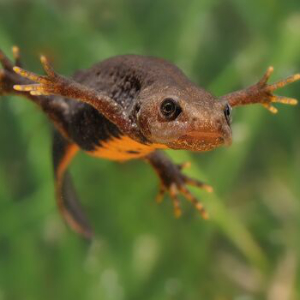
Newts are fascinating, semi-aquatic salamanders known for their remarkable ability to regenerate lost limbs and organs, including their heart and brain. They undergo a complex three-stage life cycle, often living as terrestrial "efts" before returning to water as breeding adults, with some species living up to 20+ years.
- Incredible Regeneration: Newts can regenerate fully functional limbs, tails, spinal cords, and even lenses in their eyes.
- Toxic Defense: Many newts, such as the Red-spotted newt, produce potent tetrodotoxin in their skin to deter predators.
- Three-Stage Life Cycle: They hatch as aquatic larvae with gills, transition to a terrestrial juvenile stage called an "eft," and finally become aquatic or semi-aquatic adults.
- Unique "Double" Metamorphosis: Certain species go through a complex cycle where they transition from aquatic larvae to land-dwelling efts and back to aquatic adults.
- Breeding "Dance": During mating season, male newts develop vibrant colors and crests, performing an underwater dance to attract females by waving their tails.
- Unusual Mating Behavior: According to a 2013 study, when males are absent, female newts have been observed attempting to mate with other females.
- Extremely Long Life Span: Depending on the species, newts can live a long time, with some recorded living up to 20 or even 55 years in captivity.
- Breathing Techniques: While aquatic adults have lungs, they also breathe through their skin and can absorb oxygen through the roof of their mouth.
- Environmental Monitors: Due to their permeable skin, newts are sensitive to water quality, making them crucial "bioindicators" for ecosystem health.
- Unique Toe Structure: Male newts often have thicker, webbed, or black-padded feet, which help them hold onto females during mating.
Toads
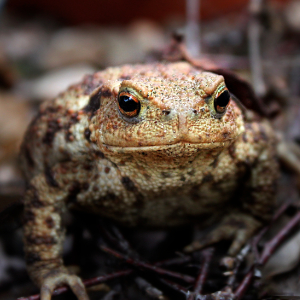
Toads are fascinating amphibians distinguished by their dry, warty skin, lack of teeth, and ability to survive far from water. They are voracious pest controllers, with some species living over 30 years and using their eyes to help swallow food.
- They Swallow with Their Eyes: When a toad eats, it blinks its eyes, pushing them down into its socket to help push food down its throat.
- They "Drink" Through Their Skin: Toads do not drink water through their mouths; they absorb moisture directly through a specialized area on their belly.
- Extremely Long Lifespans: While many live only a few years in the wild, some toads can live for a surprisingly long time, with one captive American toad reaching 36 years old.
- Voracious Garden Helpers: A single adult toad can consume up to 10,000 insects, worms, and slugs in a single summer.
- They Shed and Eat Their Skin: Toads shed their skin by using a "hiccuping" motion to peel it off, then they usually eat the old skin to recycle nutrients.
- Toxin Defense Glands: Behind their eyes, toads have parotoid glands that secrete a milky, toxic substance to deter predators.
- Lay Eggs in Long Strings: Unlike frogs, which lay eggs in clumps, toads lay their eggs in long, elegant, gelatinous strings.
- Migratory Behavior: Many toad species make large, synchronized migrations back to the exact pond where they were originally spawned.
- Masters of Disguise: Toads can shift their skin color from light brown to olive green or dark depending on humidity, temperature, and stress levels.
- They Can Be Huge: The Cane Toad can grow up to 9 inches (23 cm) in length, with some rare individuals reaching the size of a small dog.
Bees
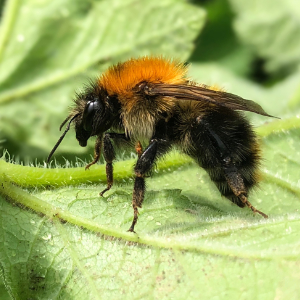
Bees are remarkable, highly intelligent insects that serve as critical pollinators for ecosystems and agriculture. They have five eyes, communicate via a "waggle dance," can travel 5 miles to forage, and are responsible for pollinating 75% of crops. A single colony can contain 60,000 bees, with workers producing only 1/12th teaspoon of honey in their lifetime.
- They Have Five Eyes: Bees have two large compound eyes on the sides of their head and three small "ocelli" eyes in the center to help navigate and detect light.
- Sophisticated Communication: To tell mates where food is, worker bees perform a "waggle dance" in a figure-eight pattern to indicate the direction and distance of food relative to the sun.
- Incredible Speed and Wing Beats: Honey bees fly at roughly 25 km/h and beat their wings 200 times per second, which creates their distinct buzzing sound.
- They Can Taste with Their Feet: Honey bees have chemoreceptors on their feet, allowing them to taste food sources upon landing, with a particular sensitivity to salt.
- Bees Sleep in the Hive: Bees sleep for 5 to 8 hours a day, often taking dozens of short naps; foragers sleep more deeply at night than house bees.
- They Have "Smelly Feet": Bumblebees leave scented footprints on flowers, allowing them to distinguish their own scent from others to avoid visiting flowers already cleared of nectar.
- Unbelievable Foraging Power: A single honey bee produces only about 1/12th of a teaspoon of honey in its lifetime, requiring thousands of bees to produce a single jar.
- The Queen’s Long Life: While worker bees live for only 5–6 weeks in the summer, a queen bee can live for up to five years.
- Two Stomachs: Bees have two stomachs—one for eating and a "honey stomach" (crop) for storing and transporting nectar back to the hive.
- They Can Be Trained: Due to their keen sense of smell, bees can be trained to detect explosives and landmines, and have even been trained to play "bee football" for rewards.